The Darryl Parker Story
- Category: Research, General, Spinal Cord Injury, Patient Stories
- Posted On:
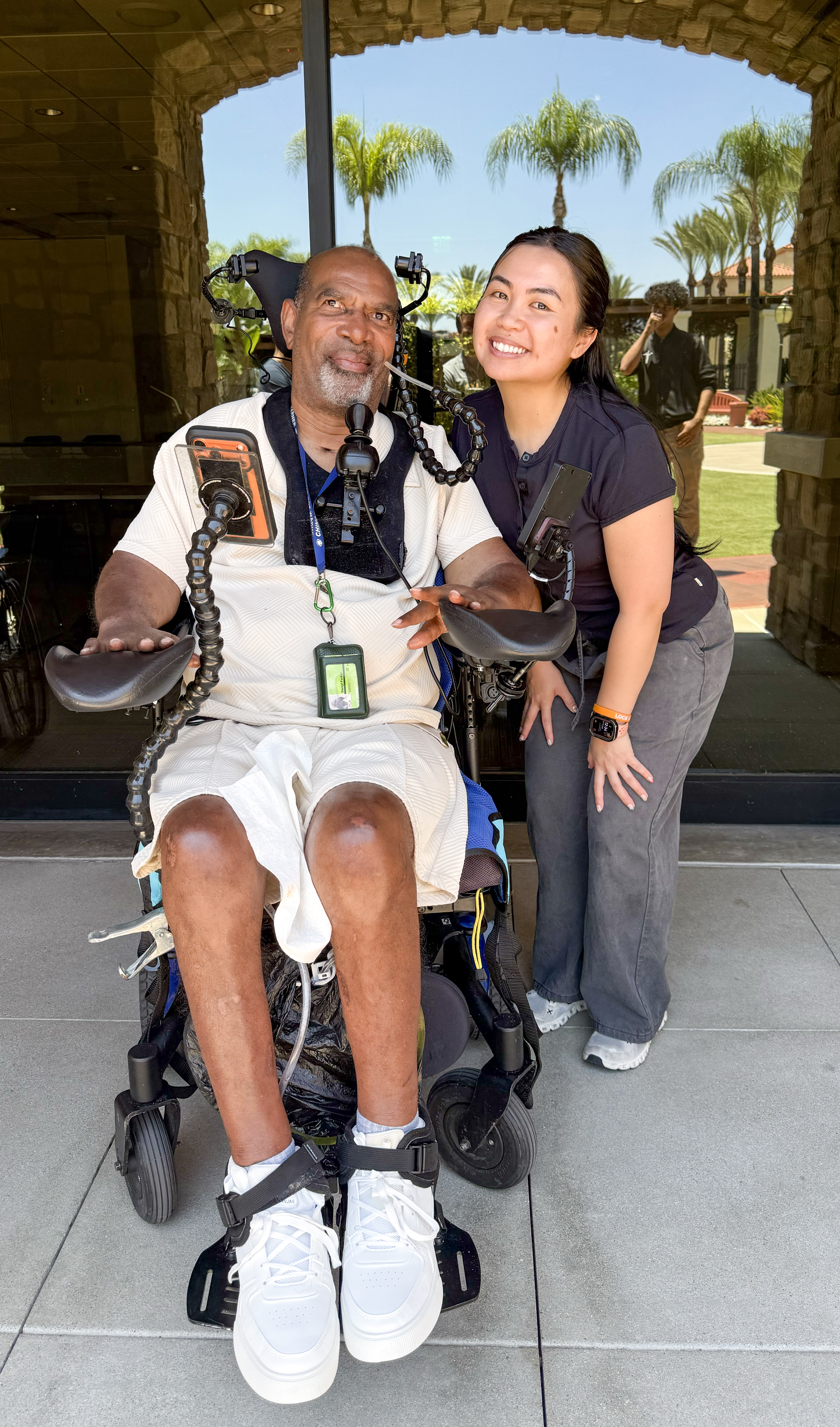
When Darryl Parker suffered a traumatic spinal cord injury in a 2011 automobile accident, he was a consummate family man. Years later, despite his injury, Casa Colina Hospital and Centers for Healthcare helps him to continue to be that man.
Thankfully, his two sons who were in the vehicle were relatively unharmed in the crash. But Darryl suffered a C2-to-C5 spinal cord injury that resulted in quadriplegia, including the inability to use his hands or arms. The initial diagnosis from that accident left his family’s future uncertain.
It was clear from the get-go Darryl would need extensive therapy and would have to learn to use a variety of assistive technologies for all his activities of daily living. After receiving medical care for several months at a hospital in Delaware, he was moved to a nursing home. However, once Darry’s partner, Cheri, learned about Casa Colina Hospital and Centers for Healthcare, she moved him back to southern California and had him admitted.
Over the ensuing months, Casa Colina therapists helped Darryl to improve function and independence through a variety of therapies, including traditional treatments concentrating on movement, function, and activities of daily living. With the support of his family, Darryl began to see his future more positively.
Technology also made a huge difference. Darryl benefited from cutting-edge rehabilitation modalities like electrical stimulation, as well as wearable assistive devices designed to help patients with spinal cord injury enhance their ability to participate in everyday life, such as eye-controlled glasses and other hands-free environmental control devices. Darryl soon realized that many of these specialized rehabilitation methods were a perk of being a Casa Colina patient. 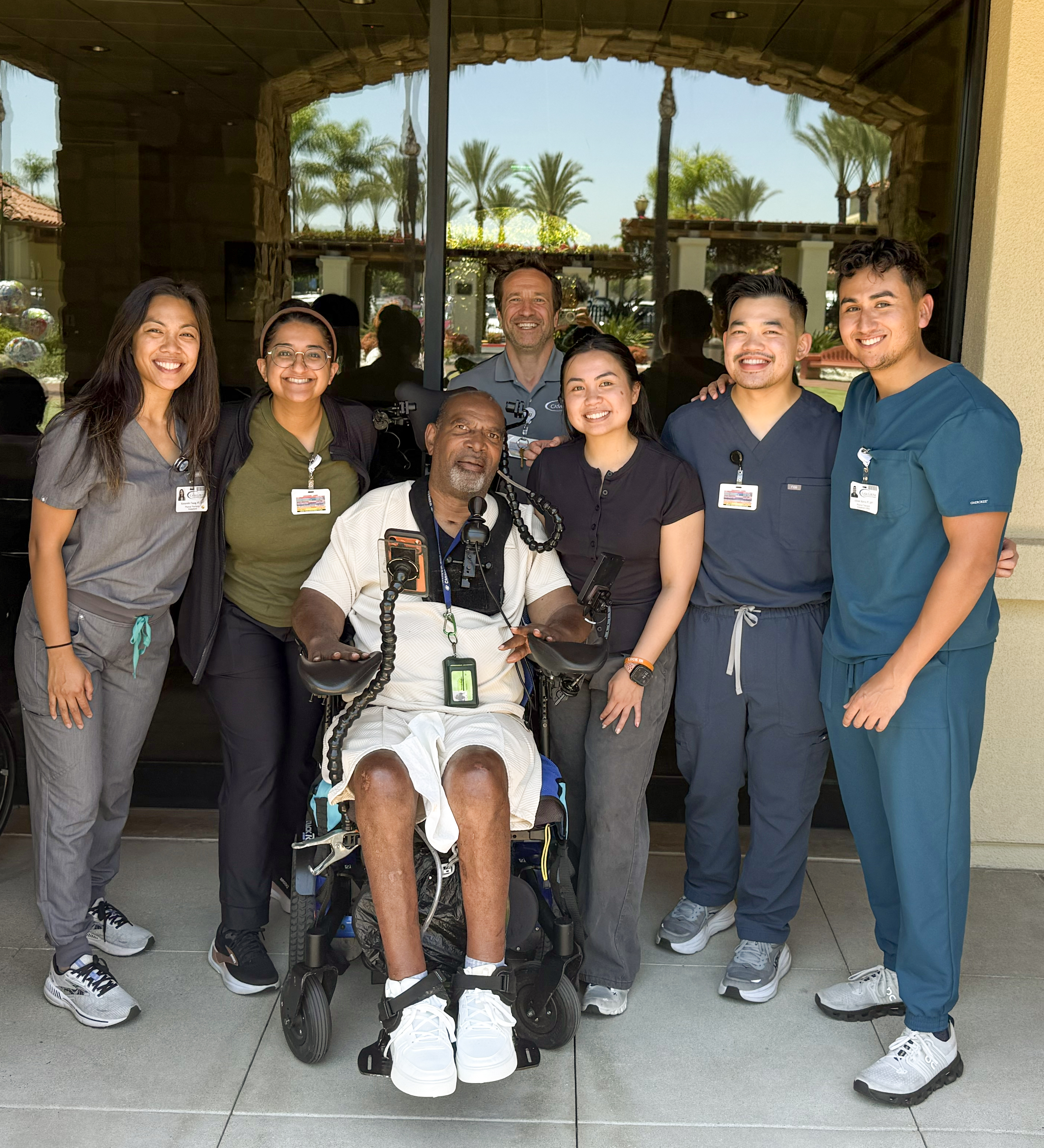
“When I first started,” says Darryl, “I couldn't even operate a phone. When I got the glasses, it opened up a whole new world for me.”
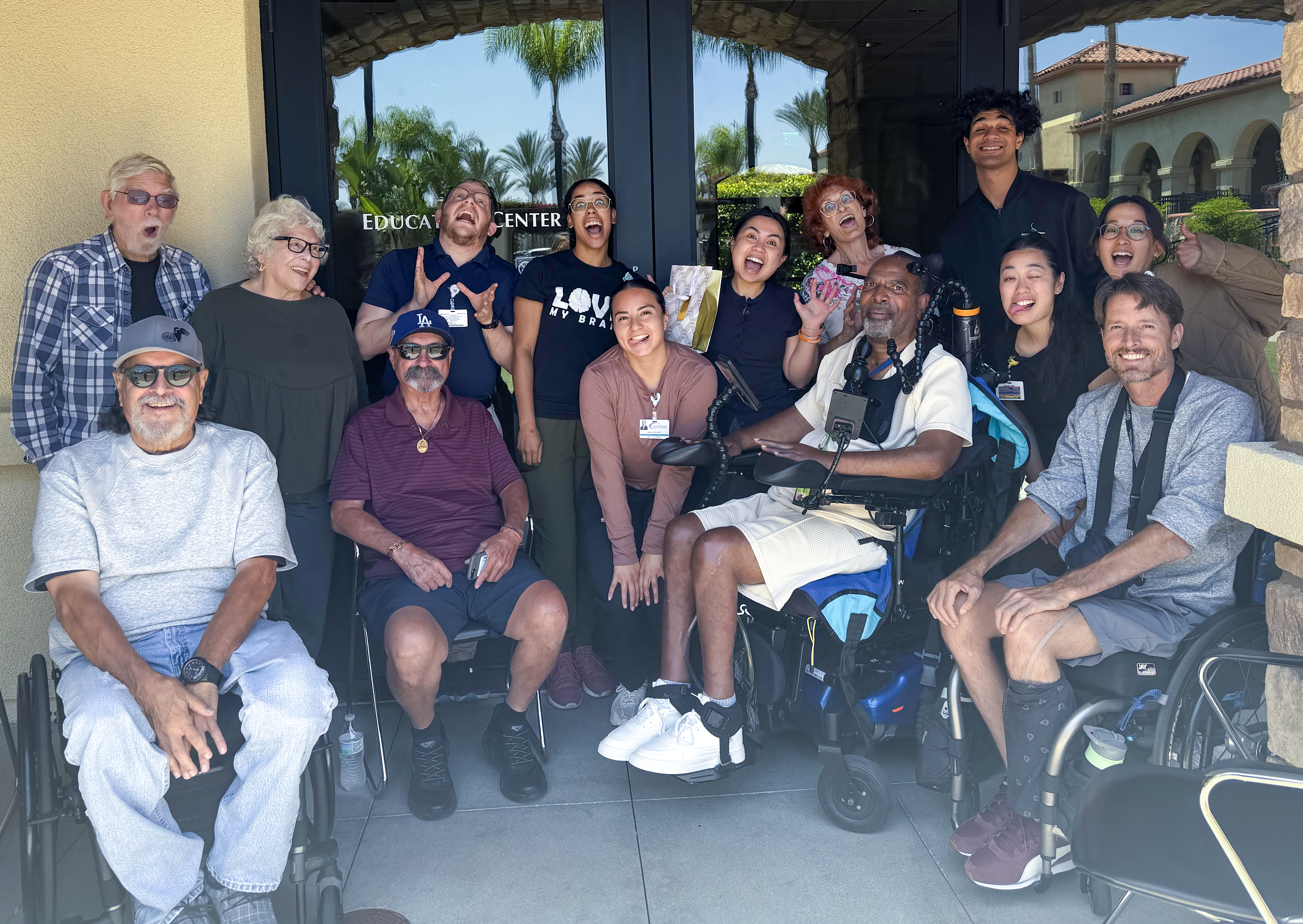
Darryl also benefited from Casa Colina’s support groups for individuals with spinal cord injury, including its longstanding relationship with the Triumph Foundation. Initially faced with the idea of living in a nursing home, or the uncomfortable option of joining a support group, Darry chose the latter. And it made all the difference, he says.
“When I came into the support group at Casa Colina, it just hit me: These are the people I want to be around,” says Darryl. “They were all positive. These people were talking about getting out and doing things.” It was these peer supporters who encouraged Darryl to expand his horizons and participate in new options like Casa Colina’s Outdoor Adventures and Wheelchair Sports program. Taking that encouragement to the extreme, Darryl even went skydiving in 2019.
“A lot of them are still my best friends today,” says Darryl.
In addition to helping newly injured patients through the support group, Darryl has also been a key player in advancing medical science at the Casa Colina Research Institute. In 2021, he was hired by Casa Colina’s freestanding research arm to contact potential research participants who, like him, were learning to live their new life with paralysis.
 “I want to give back,” he says. “If you just keep going and keep fighting, you can still have a great quality of life. Especially for the younger people—with technology the way it's going right now—it's more amazing than when I first started.”
Regardless of your level of paralysis, Darryl says, Casa Colina is home to a variety of specialty care for the spinal cord injury patient population, including advanced physical, occupational, and transitional therapies; wound care; support groups; and more.
“I tell others they should come to Casa Colina because it's a family-oriented facility,” says Darryl. “There's something special about this place. They have almost everything you would need.”